Blood sugar balance, the quiet foundation under every hormone
Before you change anything else, change the shape of your meals. Most hormone symptoms improve when glucose stops behaving like a rollercoaster.
By Adri Daniel · 21 July 2026
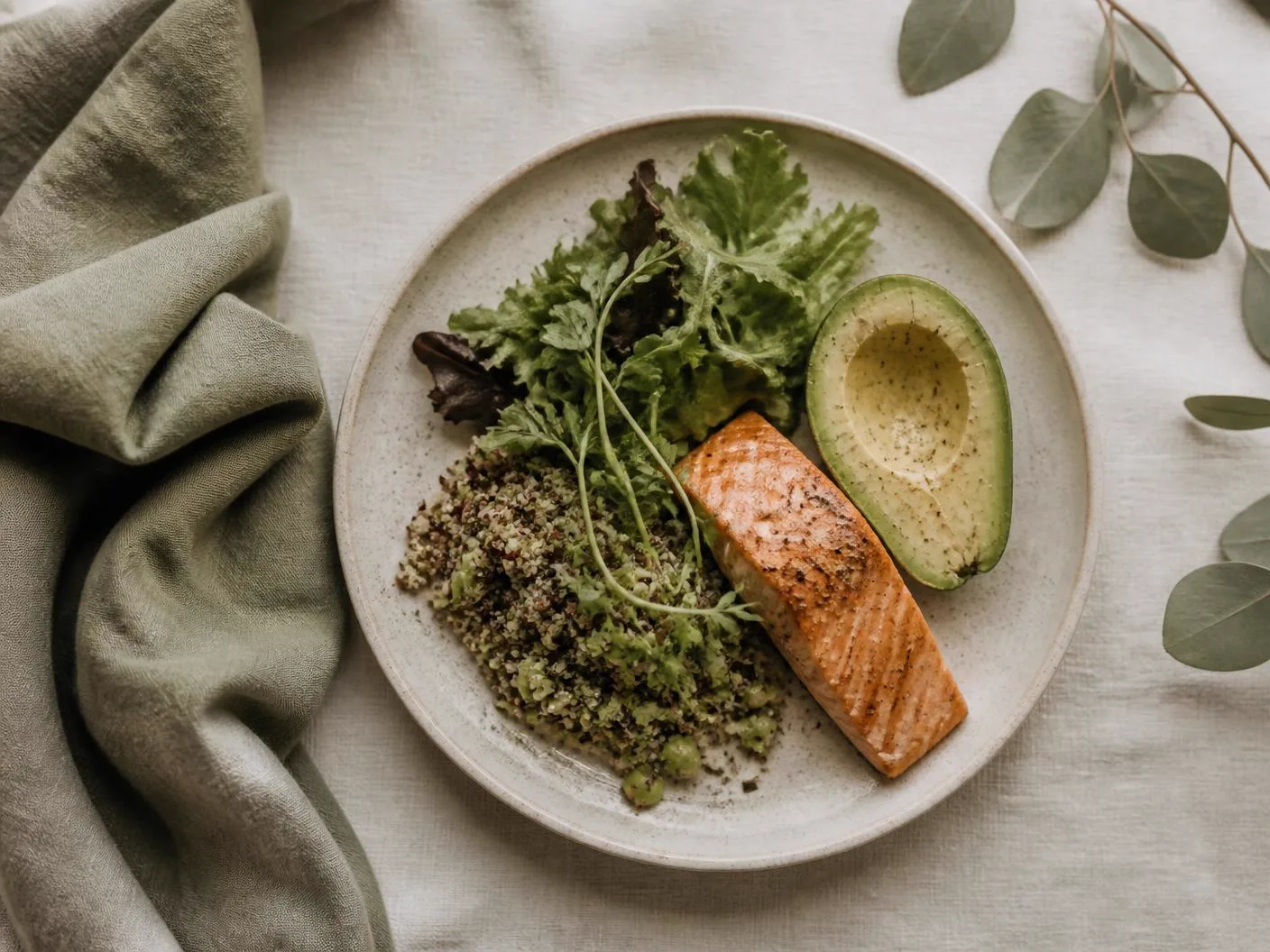
If we could only change one thing for a woman in her forties, it would not be a supplement, a training split or a fasting window. It would be the shape of her meals. Blood sugar sits underneath almost every symptom women describe, and it is the most modifiable thing on the list.
What a spike and crash actually feels like
A meal made mostly of quick carbohydrate raises glucose sharply. Insulin responds, glucose falls, and often overshoots downward. That dip is felt as sudden fatigue, irritability, difficulty concentrating and a very specific craving for something sweet or starchy. It is not a character flaw. It is your body requesting fuel in the fastest available form.
Repeated many times a day, over years, this pattern contributes to insulin resistance, which is closely tied to PCOS symptoms, stubborn abdominal fat and the energy pattern most women describe as fine in the morning and finished by four.
The four part plate
- Protein first, at every meal, roughly a palm to a palm and a half
- Fibre from vegetables, pulses, fruit with the skin on, or whole grains
- Fat that is genuinely satisfying, such as olive oil, nuts, seeds, eggs or oily fish
- Carbohydrate that you actually enjoy, eaten after the protein and fibre rather than alone
Breakfast is where most days are decided
A breakfast of coffee alone, or of cereal, toast and juice, sets the tone for the rest of the day. Glucose rises, falls, and the body spends the following hours chasing it. A breakfast containing thirty grams or so of protein changes appetite, energy and decision making right through to the evening, which is where most women feel their control slipping.
You are not undisciplined at nine in the evening. You are catching up on a day that started without enough fuel.
Small levers with real effect
A ten to fifteen minute walk after a main meal meaningfully lowers the glucose response, because working muscle takes up glucose without needing much insulin. Eating vegetables or protein before the carbohydrate portion of a meal blunts the peak. Leaving long gaps and then eating a very large meal tends to produce the biggest swings of all.
None of this requires a monitor, an app or a rule. It requires meals that are built rather than assembled by accident, most of the time. If you have been told you have prediabetes, insulin resistance or PCOS, these same principles apply with more precision and are worth working through alongside clinical support.
Your next step
Which of these is actually driving your symptoms?
The free hormone quiz takes a few minutes and gives you one clear picture of what is most likely going on, plus where to begin.
Take the free quizCommon questions
- What are the signs of blood sugar imbalance in women?
- Afternoon energy crashes, cravings for sweet or starchy food in the late afternoon and evening, irritability when a meal is delayed, waking in the night, and difficulty concentrating between meals.
- How much protein should I eat at breakfast?
- Most women feel a clear difference at around thirty grams. That looks like three eggs plus Greek yoghurt, or a substantial serving of fish, meat, tofu or a good quality protein source alongside fibre.
- Do I need a continuous glucose monitor?
- No. A monitor can be interesting, but the principles that steady blood sugar are the same with or without one, and for many women constant data increases anxiety rather than clarity.